
Last Updated: November 3, 2026
Quick Summary
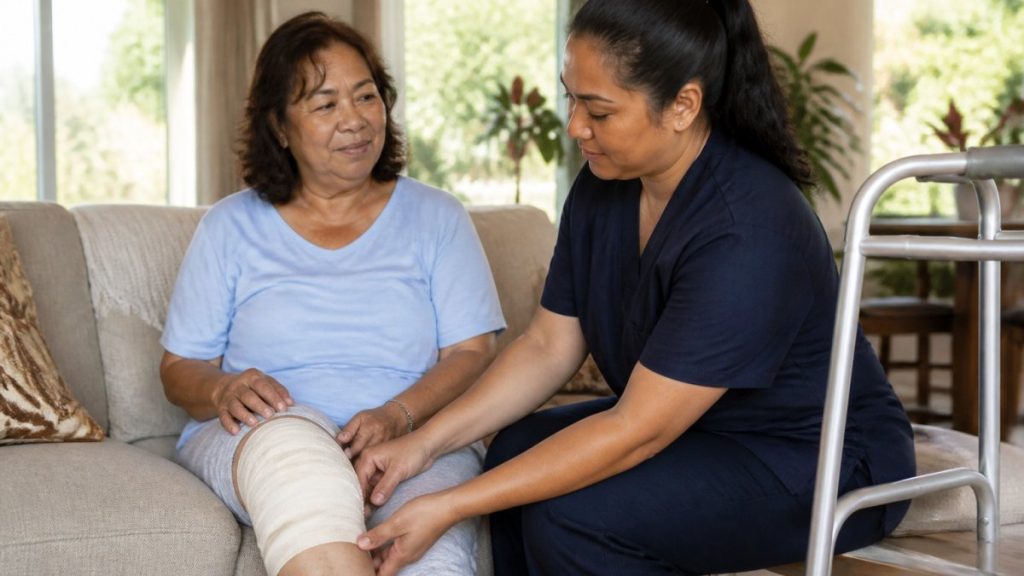
In home care for post surgery is professional support delivered where you recover best, with each plan built around the person and tailored to each recovery. It includes skilled nursing for wound care, medication management and IV treatment, plus non-medical caregiving for bathing, meals, mobility and transportation.
- Skilled nursing covers wound care, medication management and IV treatment from the first days to weeks.
- Non-medical caregivers help with bathing, meals, mobility and transportation during daily recovery.
- Live-in care provides continuous supervision and recovery support for round-the-clock needs.
- Falls are the most common setback during home recovery, and most are preventable.
- Ask for a written recovery plan before discharge and build the timeline around discharge instructions.
Table of Contents
- Post Surgery Nursing Care at Home: What It Includes
- How Long Do You Need Help at Home After Surgery?
- After Surgery Home Care Cost: What Drives the Price
- Fall Prevention After Surgery at Home
- Getting Started with Recovery Support
- Frequently Asked Questions
Post Surgery Nursing Care at Home: What It Includes
In home care for post surgery is professional support delivered where you recover best, and at Fijian Homecare we build each plan around the person, tailoring in home care for post surgery to each recovery. Skilled nursing and non-medical caregiving are two different kinds of support during recovery. Compare the range of tailored home health care services available before choosing. Medicare’s guidance on home health services separates skilled home health from custodial care, and insurance treats them differently, ask for a written recovery plan before discharge. (Source: Medicare’s guidance on home health services)
How Long Do You Need Help at Home After Surgery?
Build the timeline around hospital discharge instructions, not a guess. Review the home healthcare options and request a quote to plan the length of care.
After Surgery Home Care Cost: What Drives the Price
Pricing depends on quantity of care, dates, and delivery, so please contact Fijian Homecare directly for current pricing or a quote. Compare hourly caregiving services, and contact us to talk through pricing.
| Care Type | Typical Use | What It Covers |
|---|---|---|
| Skilled nursing | First days to weeks | Wound care, medication management, IV treatment |
| Non-medical caregiver | Daily recovery | Bathing, meals, mobility, transportation |
| Live-in care | Round-the-clock need | Continuous supervision and recovery support |
Fall Prevention After Surgery at Home
Falls are the most common setback during home recovery, and most are preventable. Clear pathways, remove loose rugs, add night lighting, and keep a walker within reach; a caregiver trained in safe transfers makes the biggest difference in the first weeks, and dizziness on standing should be reported to the care team.

Getting Started with Recovery Support
Recovering at home works best when the plan is written down and someone else carries part of the load. Fijian Homecare provides 24/7 support and live-in care, specialized dementia care, and consistent, dedicated caregivers. Get started with Fijian Homecare and give your family peace of mind during recovery.
Frequently Asked Questions
Does Medicare pay for a caregiver after surgery?
Medicare covers skilled home health care when it is medically necessary and ordered by a doctor, which can include nursing visits, physical therapy, and occupational therapy. It does not pay for non-medical help such as bathing assistance, meal preparation, or companionship. Those services are usually paid privately, through long-term care insurance, or through Medicaid programs if you qualify. Ask the discharge planner to confirm what your plan covers before you leave the hospital.
What is the difference between home health care and a home caregiver?
Home health care is clinical and ordered by a physician. It covers skilled nursing, physical therapy, occupational therapy, and speech therapy, and it is typically short-term and goal-based. A home caregiver provides non-medical support: bathing, dressing, meal preparation, medication reminders, mobility assistance, and transportation to follow-up appointments. Many people recovering from surgery need both, and the two can run at the same time.
How can you prevent falls while recovering from surgery at home?
Clear the path first. Remove loose rugs, cords, and clutter from walkways, and keep a light on in hallways and bathrooms. Install grab bars in the bathroom and a rail near the bed if balance is limited. Keep the items you use most within arm’s reach so you are not reaching or climbing. Follow the mobility plan your physical therapist gave you, use the walker or cane as directed, and ask a caregiver to help with transfers until you are steady on your feet.
