
Last Updated: October 24, 2026
Quick Summary
To prevent falls for seniors, start with a fall risk assessment that reviews health, medications, vision, strength, and home hazards, then act on what you find. Add balance and strength exercises, wear non-skid rubber-soled shoes, and remove trip hazards like loose rugs and clutter. Install grab bars and improve lighting on stairs and hallways.
- A fall in the past year, four or more medications, and no vision check in 12 months are checklist warning signs.
- Try a heel-to-toe walk for 10 steps and a single-leg stand for 10 seconds per side.
- Do 10 sit-to-stands without using your hands and 10 side steps each way along a counter.
- Never wear slippers or socks; wear non-skid rubber-soled shoes instead.
- After a fall with pain, deformity, a head strike, or confusion, call 911 and do not rush to lift the person.
Table of Contents
- Senior Fall Risk Factors and a Home Safety Checklist for Seniors
- Balance Exercises for Seniors and Daily Habits That Reduce Fall Risk
- What to Do After a Senior Falls and How to Plan Ahead
- Frequently Asked Questions
Senior Fall Risk Factors and a Home Safety Checklist for Seniors
Learning how to prevent falls for seniors starts with why they happen: personal risk factors and home hazards. (Source: the Centers for Disease Control and Prevention (CDC) STEADI fall prevention resources)
A fall risk assessment is a structured review of a senior’s health, medications, vision, strength, and home environment to identify what makes a fall likely. It is the foundation of any real prevention plan.
Common risk factors include muscle weakness and poor balance, vision changes, dizziness-causing medications, a prior fall, low vitamin D or dehydration, sleep problems and alcohol use, plus home clutter, loose rugs, and poor lighting.
A screening checklist helps you spot these early: a fall in the past year, four or more medications, no vision check in 12 months, inability to stand from a chair without arms, loose rugs or clutter in walkways, missing grab bars, and stairs without sturdy handrails.
The CDC’s STEADI fall prevention resources offer a free screening tool clinicians use nationwide. Bring your checklist to a doctor’s visit.
Balance Exercises for Seniors and Daily Habits That Reduce Fall Risk
Balance and strength training are the closest thing to a proven fall prevention strategy, and most need no equipment.
With a sturdy chair nearby, try a heel-to-toe walk for 10 steps, a single-leg stand for 10 seconds per side, 10 sit-to-stands without using your hands, and 10 side steps each way along a counter.
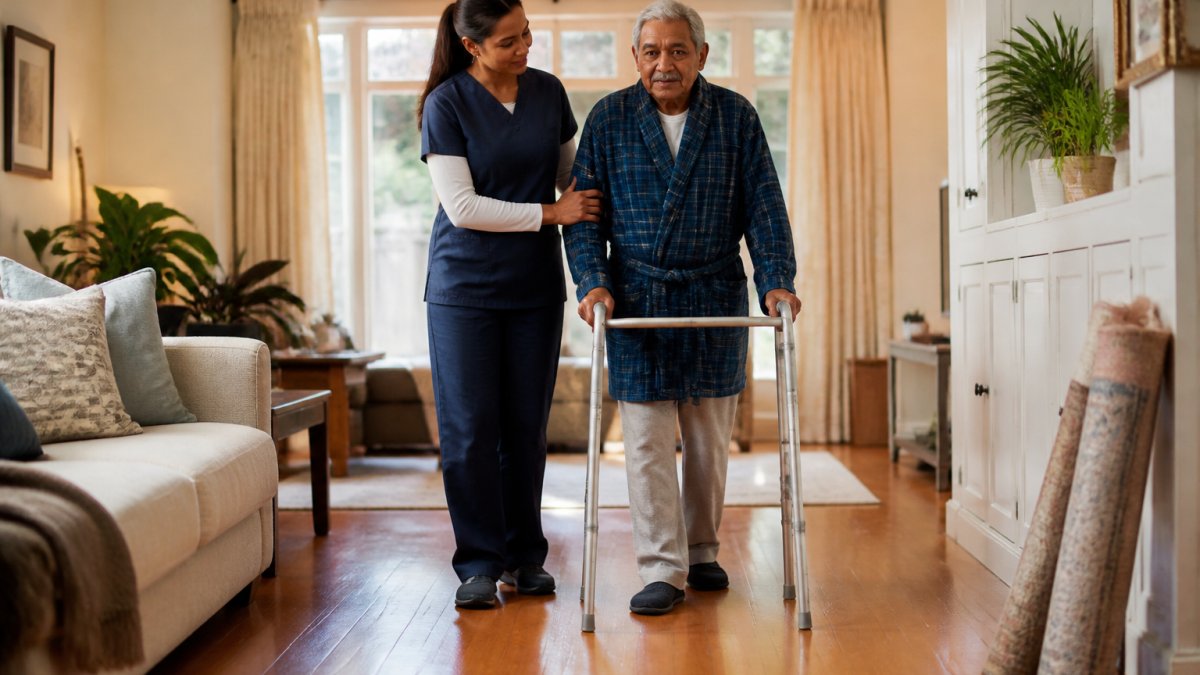
Daily habits matter too: wear non-skid rubber-soled shoes, never slippers or socks; stay hydrated; eat protein-rich meals; ask a healthcare professional about vitamin D; limit alcohol; and review medications with a pharmacist.
For more practical caregiver tips, see eight things caregivers wish you knew about helping seniors at home.
These simple exercises need no equipment and can be done with a sturdy chair nearby.
| Exercise | How to do it |
|---|---|
| Heel-to-toe walk | Walk 10 steps heel to toe |
| Single-leg stand | Stand on one leg for 10 seconds per side |
| Sit-to-stands | 10 reps without using your hands |
| Side steps | 10 steps each way along a counter |
What to Do After a Senior Falls and How to Plan Ahead
Stay calm and check for injury before moving anyone. If there is pain, deformity, a head strike, or confusion, call 911. Do not rush to lift the person up.
If there is no obvious injury, help them roll to their side, get to hands and knees, and rise using a sturdy chair. Watch for dizziness. Report every fall to a doctor, even a minor one.
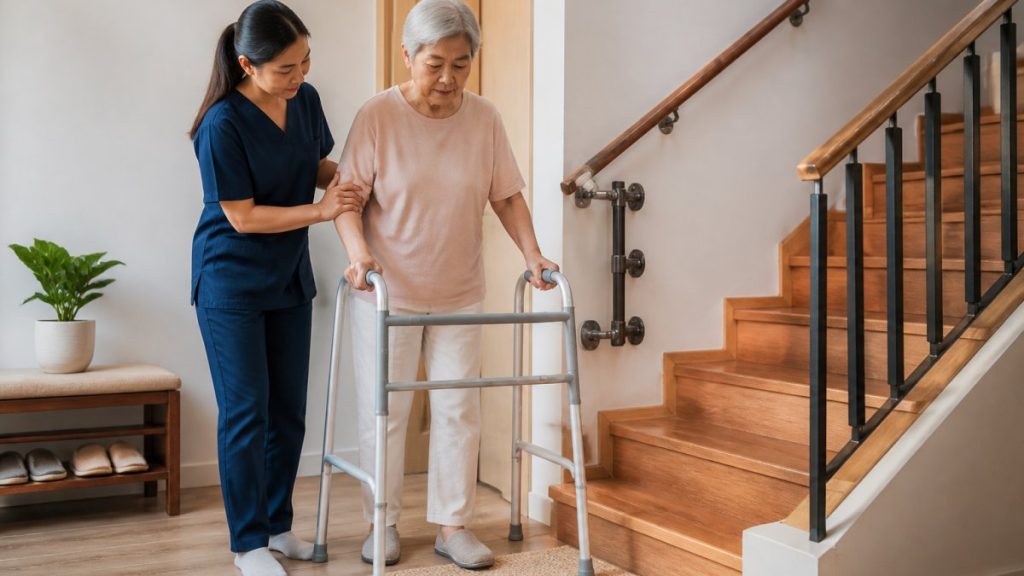
Planning ahead makes the next fall less likely: remove trip hazards and add lighting on stairs and hallways; install grab bars, a shower chair, and a raised toilet seat; get a cane or walker fitted properly; arrange a medication review and vision check; and bring in caregiver support.
After a fall, families often need help fast. Our services cover 24/7 support, live-in care, and specialized dementia care so recovery happens safely at home. When ready, contact us.
The National Institute on Aging’s fall prevention guidance is a trustworthy starting point for families.
Frequently Asked Questions
What exercises can help older adults improve balance?
Balance exercises for seniors include standing on one foot while holding a counter, heel-to-toe walking, and tai chi. Strength training for the legs and core also helps. A physical therapist can design a safe program based on your parent’s mobility. Start slowly and use support nearby. Regular practice, even a few minutes daily, can improve stability and reduce the chance of a fall.
When should an older adult see a doctor after a fall?
See a doctor after any fall that causes pain, swelling, or difficulty moving, even if there is no visible injury. Also seek care if the person hit their head, takes blood thinners, or feels unsteady afterward. A healthcare professional can check for fractures, review medications, and assess fall risk. If the person cannot get up or has severe pain, call emergency services.
How can I make a home safer for an older adult?
Use a home safety checklist for seniors: remove loose rugs and clutter, add grab bars in the bathroom, install handrails on both sides of stairs, improve lighting, and keep frequently used items within reach. Non-slip mats and a shower chair also help. A professional caregiver can do a room-by-room walkthrough and suggest changes tailored to your loved one’s mobility.
Falls are not an unavoidable part of aging, but preventing them takes a plan and often an extra pair of hands. Fijian Homecare provides consistent, culturally respectful caregivers, 24/7 and live-in support, and specialized dementia care so your parent can age safely at home. Get started with Fijian Homecare and build a safer daily routine for the person you love.
