
Last Updated: October 29, 2026
Quick Summary
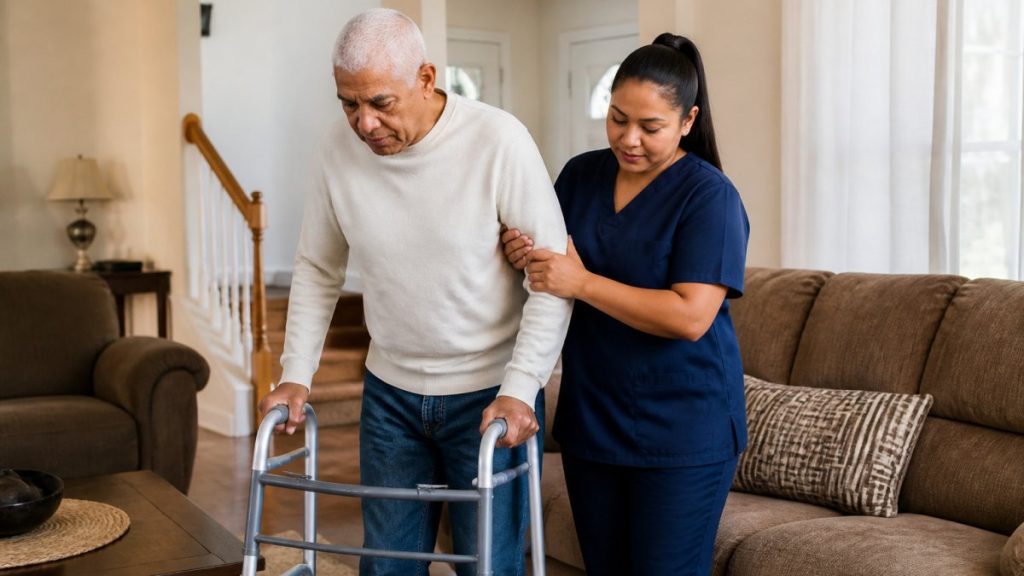
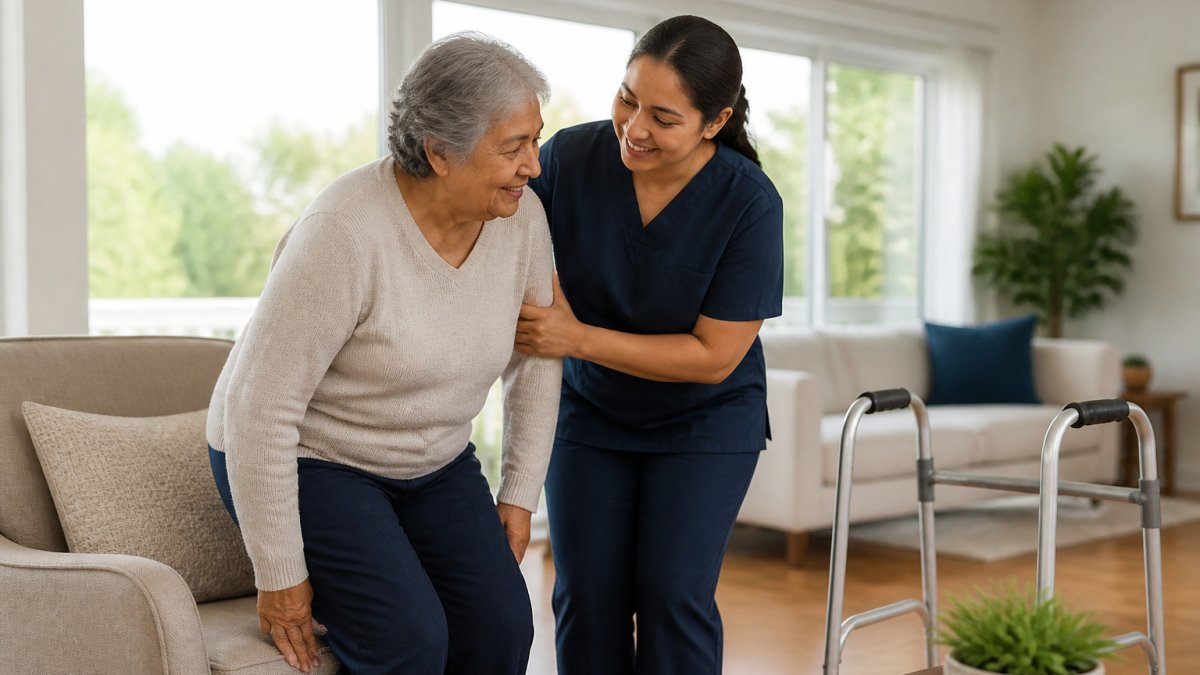
In-home care for mobility means a trained caregiver comes to the home to provide hands-on help with movement and daily tasks, such as getting up from a chair, walking to the bathroom or managing stairs safely. It lets an older adult with limited mobility keep living in the place where they are most comfortable.
- Fall risk is one of the biggest concerns for an older adult with limited mobility.
- Room-by-room checks for loose rugs, poor lighting and clutter reduce risk.
- Grab bars and handrails should be added where they are missing.
- Use a gait belt when helping with transfers.
- Do not lift a person by the arms; call a professional when movement becomes unsafe.
Table of Contents
- How In-Home Care Supports Limited Mobility
- How to Help Someone with Limited Mobility and Prevent Falls
- Frequently Asked Questions
- Next Step: Arranging a Mobility Assessment and Care Plan with Fijian Homecare
How In-Home Care Supports Limited Mobility
If a parent can no longer get up from a chair, walk to the bathroom or manage the stairs safely, the question is usually not whether they need help, but how much and what kind. You can request a quote for licensed home healthcare to see what daily support would look like in your Cloverdale home. In-home care for mobility issues puts a trained caregiver in the home to provide hands-on help with movement and daily tasks, so your parent can keep living where they are most comfortable. (Source: National Institute on Aging’s resources on fall prevention)
Our caregivers at Fijian Homecare offer 24/7 support and live-in care, and our specialized dementia care is available for families who need it. For specific services and availability, contact Fijian Homecare directly.
Learn more about in-home care for daily support at home.
How to Help Someone with Limited Mobility and Prevent Falls
Falls are one of the biggest risks for an older adult with limited mobility. Simple changes at home often reduce that risk more than any single piece of equipment. Our often overlooked essentials checklist shows which parts of a care plan are easiest to miss. Start with a room-by-room check for loose rugs, poor lighting and clutter in walkways, then add grab bars and handrails where they are missing.
Assisting someone safely matters as much as the environment. Use a gait belt when helping with transfers, and do not lift a person by the arms. When movement becomes unsafe, call a professional rather than attempting it alone.
For a broader look at what supports prevention, see our guide to eight things caregivers wish you knew.
Frequently Asked Questions
When should a family consider in-home care for mobility issues?
Consider in-home care when an older adult has trouble walking safely, needs help getting in and out of bed or the bathroom, or has had a recent fall or hospital stay. Families often notice that a parent is avoiding stairs, holding onto furniture, or skipping showers because of balance concerns. A consultation with a qualified healthcare professional can help clarify the level of support needed and whether a formal care plan is appropriate.
What equipment can make a home safer for someone with mobility problems?
Common home safety equipment for seniors includes grab bars in bathrooms, raised toilet seats, non-slip mats, handrails on both sides of stairs, and walkers or canes suited to the person’s needs. Good lighting along hallways and at night also reduces fall risk. Pricing and availability vary, so check with the equipment supplier or Fijian Homecare directly for current options and a quote.
What are the common signs of caregiver fatigue?
Signs of caregiver fatigue include persistent exhaustion, irritability, withdrawing from friends, changes in sleep or appetite, and feeling overwhelmed by daily tasks. Caregivers who skip their own medical appointments or feel guilty about taking breaks may be at higher risk. Respite care, shared responsibilities, and professional in-home support can ease the load. Contact Fijian Homecare to discuss options.
Next Step: Arranging a Mobility Assessment and Care Plan with Fijian Homecare
A mobility assessment is the most useful first step. It identifies which tasks your parent needs help with and which they can still do independently. Fijian Homecare can build a care plan around those findings, with consistent caregivers and support available 24/7. Reach out to start the conversation, and review our full range of services before you decide.
