
Last Updated: November 12, 2026
Quick Summary
Preventing elderly falls at home starts with removing hazards like loose rugs and cords, then improving lighting in hallways, stairwells and bathrooms. Add grab bars, handrails and non-slip mats, and build strength with simple daily exercises such as one-foot standing and chair stands.
- Anchor rugs with non-skid pads or remove them entirely.
- Place a lamp within reach of the bed and add night lights between bedroom and bathroom.
- Install grab bars beside the toilet and inside the shower.
- Hold a counter and stand on one foot for 10 seconds per side.
- Ask a pharmacist whether current prescriptions cause dizziness.
Table of Contents
- Step 1: Remove Hazards and Improve Lighting Throughout the Home
- Step 2: Add Fall Prevention Devices and Build Strength with Exercise
- Step 3: Book Care Support, Review Your Plan and Take the Next Step
- Frequently Asked Questions
Step 1: Remove Hazards and Improve Lighting Throughout the Home
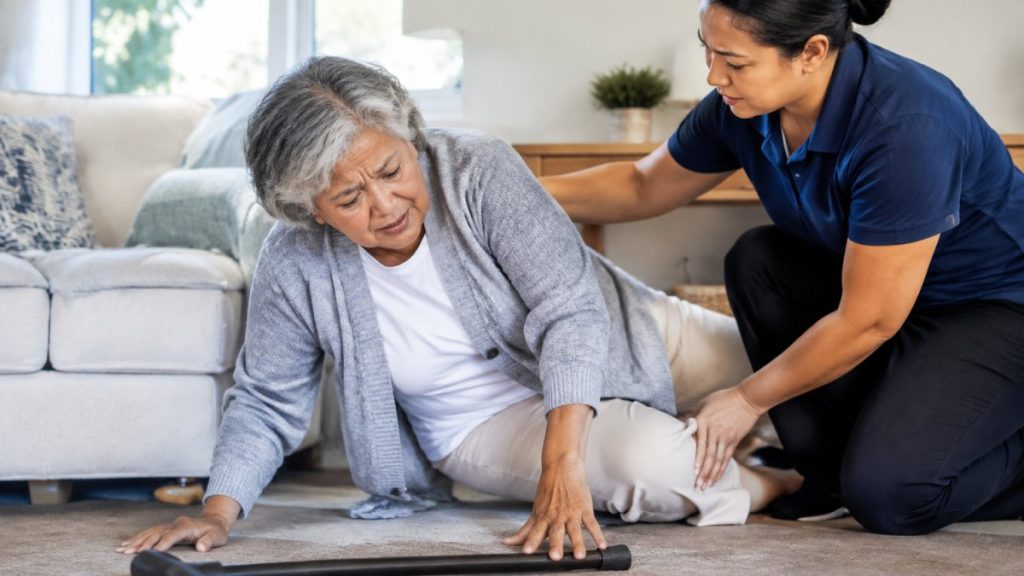
Elderly falls cause serious injuries for many older adults, and many happen at home (the CDC). Start with the rooms your parent uses every day.
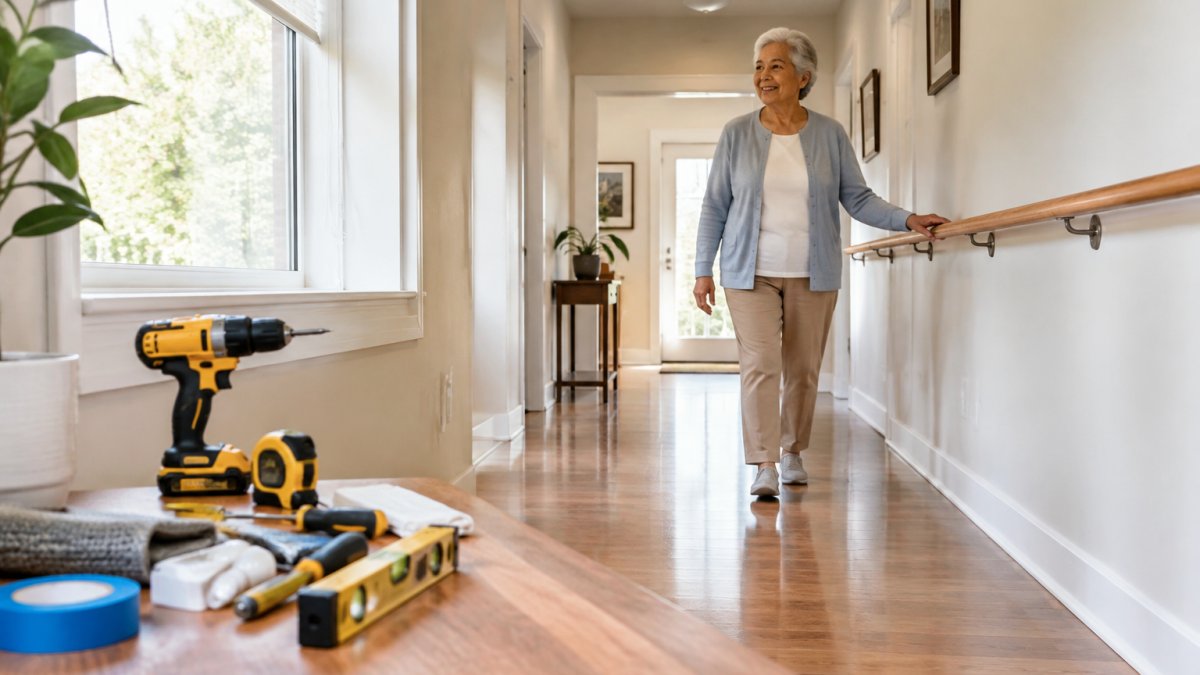
Remove or secure anything that could catch a foot; anchor rugs with non-skid pads or remove them.
Improve lighting next. Install brighter bulbs in hallways and stairwells, add night lights between the bedroom and bathroom, and place a lamp within reach of the bed.
Step 2: Add Fall Prevention Devices and Build Strength with Exercise
Devices support balance on bad days, and exercise builds the strength that keeps a person steady.
Add grab bars beside the toilet and inside the shower, handrails on both sides of staircases, a non-slip mat in the tub, and a raised toilet seat if standing up is hard.
Fall prevention exercises for seniors do not need a gym:
Stand on one foot while holding a counter, 10 seconds per side; sit down and stand up from a chair several times; walk heel to toe along a wall; and take a short daily walk, as tolerated. (Source: raise fall risk)
Talk with a doctor or physical therapist before starting a new routine, especially if you have concerns about falls.
Also ask a pharmacist whether any current prescriptions cause dizziness and raise fall risk.
The article lists these devices and exercises for reducing fall risk at home.
| Item | Where or how | Detail |
|---|---|---|
| Grab bars | Beside the toilet and inside the shower | Support on standing and bathing |
| Handrails | Both sides of staircases | Steady use on stairs |
| Non-slip mat | In the tub | Reduces slipping in the bath |
| Raised toilet seat | If standing up is hard | Eases sitting and rising |
| One-foot stand | Holding a counter | 10 seconds per side |
| Chair stand | Sit down and stand up | Repeat several times |
| Heel-to-toe walk | Along a wall | Builds balance |
| Daily walk | Short walk | As tolerated |
Step 3: Book Care Support, Review Your Plan and Take the Next Step
A home safety checklist for elderly relatives helps you track progress; review the rooms, devices, and exercises above, then mark what is still missing.
If your parent needs more help than family can give, a professional caregiver can take over daily tasks. In-Home Care offers in-home eldercare. Families who need nursing support can review Home Healthcare options.
Hourly Caregiving Services may suit families who only need help for a few hours a day. For nights, Live-In care Service provides 24/7 support. If your parent’s plan is missing key steps, What’s Missing in Your Care Plan? The Often-Overlooked Essentials lists the items caregivers check most often.
Fijian Homecare offers eldercare across California, with 24/7 support, live-in care, and dementia care delivered by consistent caregivers. Text Now to talk with a team member about your parent’s needs.
Frequently Asked Questions
What are the most effective fall prevention strategies for seniors?
The most effective approach combines a few steps: removing tripping hazards such as loose rugs and cords, improving lighting in hallways and stairs, installing grab bars in the bathroom, and keeping up with regular balance and strength exercises. Ask a doctor or physical therapist to review medications that cause dizziness, since side effects are a common contributor to falls. Start with the highest-risk areas, usually the bathroom and stairs, and work outward.
How can I safely get off the floor after a fall?
Stay calm and check for injuries before moving. If you can, roll onto your side, push up onto one hand and knee, then slowly move to a sturdy chair to pull yourself up. If you are hurt, cannot get up, or hit your head, do not try to stand. Call for help, use a medical alert device if you have one, and wait for emergency responders. Afterward, tell your doctor about the fall so the cause can be reviewed.
What home safety checklist should I use for an elderly parent?
Walk through each room and check for loose rugs, clutter in walkways, electrical cords across floors, and poor lighting at night. Confirm that stairs have sturdy handrails, that the bathtub and toilet have grab bars, and that nightlights light the path from bed to bathroom. Keep frequently used items within easy reach and make sure footwear is supportive with non-slip soles. Repeat the check every few months, since needs change over time.
